CBD suppositories can sound intimidating if you’ve never used them. But many people aren’t exploring them for novelty—they’re exploring them because they want localized pelvic comfort support, support that feels relevant to sex, and a routine that feels more targeted than “whole-body” approaches—especially for women thinking about comfort, stress, and sexual function together.

This guide explains what CBD suppositories are, why some women consider them, and how to start gently—without overpromising (including being clear about what works for you vs. what still needs clinician support).
Educational content only. Not medical advice. If you have severe pelvic pain, unexplained bleeding, fever, unusual discharge, concern for infection, or symptoms that haven’t been evaluated, talk with a qualified clinician. CBD should never delay necessary medical care.
What are CBD suppositories?
A CBD suppository is a localized format designed to melt and absorb near sensitive tissue.
Some women explore suppositories for pelvic comfort support because the format feels:
- localized
- discreet
- easier to use consistently than “last-minute fixes”
Who might consider CBD suppositories (and who should not self-experiment)
Some women consider suppositories when
- discomfort feels localized to the pelvic area
- external support (like intimacy oil) isn’t enough
- the goal is comfort support as part of a broader plan (pelvic PT, stress reduction, online mindful compassion practices, clinician care)
- they want more consistent support around intimacy, including comfort that may affect sexual function during sex
Involve a clinician first if you have
- new or severe pelvic pain
- unexplained bleeding
- fever, unusual discharge, or concern for infection
- significant pain during sex that hasn’t been evaluated
- complex gynecologic history or hormone-sensitive cancer history (including questions post-cancer treatment)
- a history of, or current, gynaecological cancer treatment – pmc research topics you’re trying to apply to your situation (bring your questions to your clinician rather than self-experimenting)

What to look for before you buy (this matters)
Because this is sensitive tissue, standards should be higher—not lower.
Prioritize:
- Simple ingredients you can understand
- Clear cannabinoid content (CBD amount and whether there’s THC)
- Third-party testing you can access (and note the COA collection date so you know it’s current)
Start with transparency:
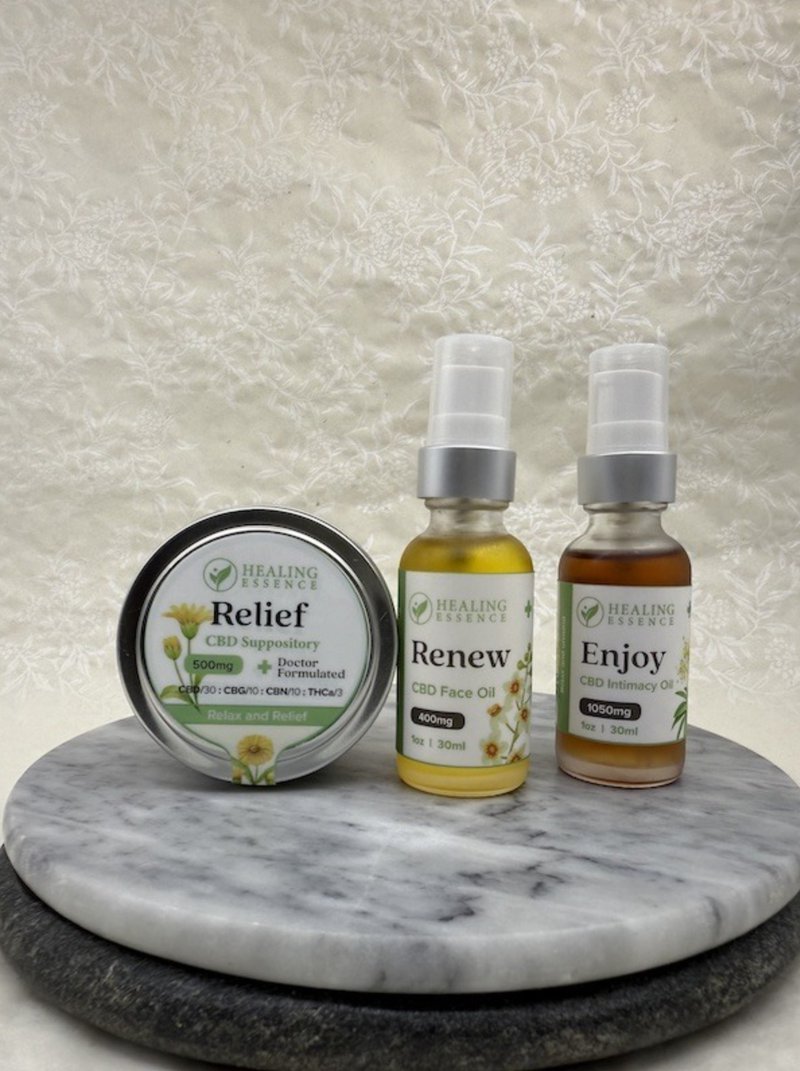
If you’re exploring Healing Essence’s localized option:
Suppositories vs intimacy oil vs whole-body support
A simple way to decide is:
Where do I want support?
- External comfort + ritual support: ENJOY CBD intimacy oil
- Localized pelvic comfort support: RELIEF suppository
- Curated multi-format start: Women’s wellness bundle
For the full Start‑Here overview:
How to start low (a gentle first-week plan)
A Healing Essence approach is always: start low, go slow, observe closely—and build from a caring foundation of safety, simplicity, and consistency.
Days 1–3: simplify and observe
- Start with a smaller portion than you think you need
- Use it at the same time of day
- Track comfort, sleep, and any sensitivity changes
Days 4–7: adjust only if needed
- Increase slowly if you choose to adjust
- Keep notes
- Stop and reassess if anything feels irritating or concerning
What “working” can look like (realistic expectations)
Often the first signs are subtle:
- less bracing
- easier transitions into rest
- a calmer pelvic “baseline”
If you’re looking for treatment of an underlying condition, that requires clinician evaluation. CBD may be one comfort tool for some people, but it should not replace medical care.
Evidence note: “what works,” preliminary research, and effectiveness
When people search for what works, it helps to separate three things:
- personal response (what you notice over time)
- product quality (ingredients + testing)
- research evidence (what’s been studied)
For pelvic comfort and intimacy, you may see early-stage evidence described as a preliminary investigation or even a preliminary randomised control trial in adjacent areas, but that doesn’t automatically translate into proven effectiveness for your specific symptoms or situation.
If you’re evaluating information yourself, do a quick “study hygiene” check: read the background, objectives, participant roles, and methods—rather than relying on headlines. Also be cautious with “review roundups” that are essentially a content analysis of testimonials.
Some people also benefit from supportive, non-product adjuncts—like a mindful-compassion group or a brief online mindful compassion group intervention adjunct—as part of a broader plan (especially when stress, guarding, or fear loops are involved).
(If you’re reading an open access article, it may be published under a Creative Commons Attribution license with specific terms and conditions—useful if you’re saving or sharing it with your clinician.)
Frequently asked questions
Are CBD suppositories the same as THC suppositories?
Not necessarily. Many products on the market include THC; some are CBD-focused. Always verify cannabinoid content and COAs.
How long do CBD suppositories take to work?
Response varies by person and goal. Some people notice effects sooner; others notice more with consistent use over time.
Are CBD suppositories safe?
Sensitive tissue deserves extra caution: simple ingredients, transparent testing, and a conservative approach. If you have red-flag symptoms or complex history, involve a clinician.
Choosing your next step
- Localized pelvic comfort support: RELIEF suppository
- External comfort ritual: ENJOY CBD intimacy oil
- Curated start: Women’s wellness bundle
- Testing transparency: COAs
- Need help choosing a conservative plan? Contact (don’t share sensitive information via web forms; for urgent concerns, contact a clinician or an official government organization health resource in the United States)
A calm reminder: the best routine is the one you can sustain gently. Clarity and consistency usually beat intensity.
Search-note (optional): if you’re deep-diving studies, you may run into author-name queries like “samantha banbury,” “hannah tharmalingam,” or “simon erridge,” or institution keywords like “lithuanian university” and “health sciences.” Use them as starting points for discussion with your clinician, not as a substitute for personalized care.